

If you still think PR is just about sending press releases, you are leaving serious value on the table.
In an integrated marketing strategy, PR plays a central role in supporting SEO, building brand credibility and generating high-quality content across multiple channels. When done properly, public relations does far more than secure coverage. It drives authoritative backlinks, strengthens search visibility, fuels website and blog content, enhances LinkedIn presence and positions leaders as trusted spokespeople.
PR is not a bolt-on activity. It is a core engine of organic growth.
Here is how PR and media activity directly supports SEO and long-term brand authority.
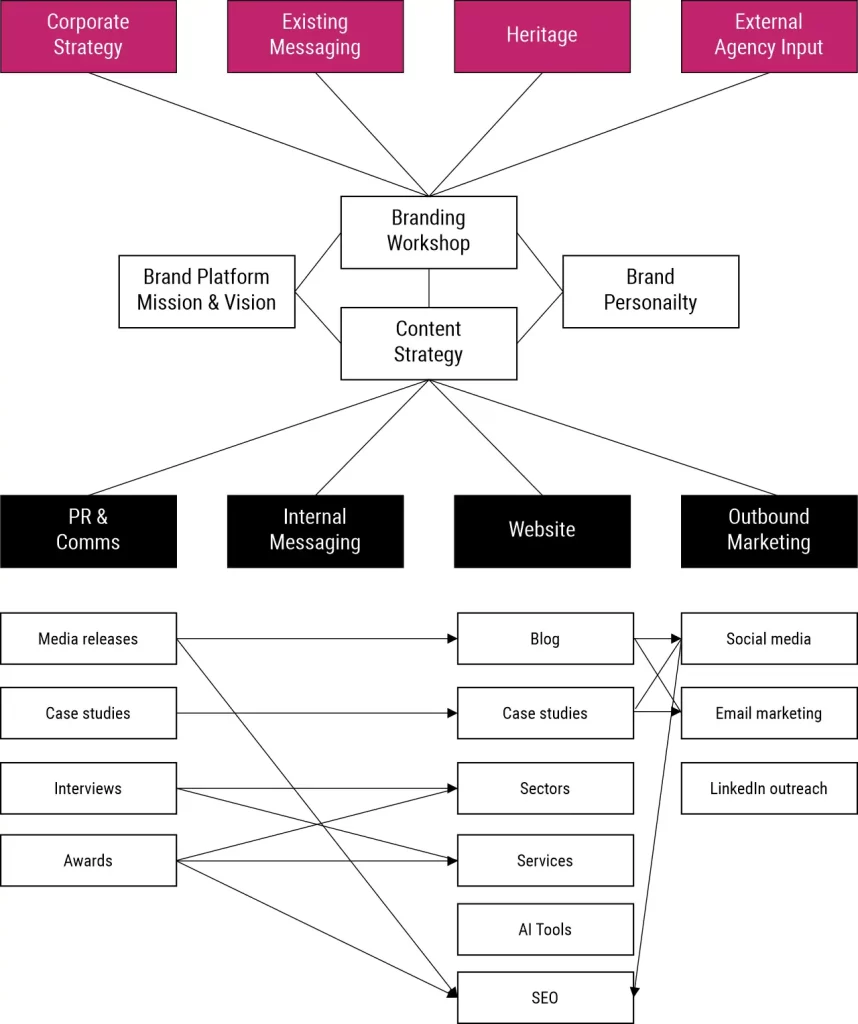
An integrated marketing approach leverages the effect of PR & Comms across all marketing disciplines
PR and SEO: Why They Belong Together
Search engines reward authority, relevance and trust. Modern SEO is no longer about technical tricks or keyword stuffing. It is about building genuine credibility.
This is where PR becomes powerful.
A well-executed PR strategy generates:
High-quality, relevant backlinks
Brand mentions across authoritative publications
Expert commentary and interviews
Award nominations and recognition
Case studies and thought leadership content
All of these send strong trust signals to search engines. They also strengthen your brand in the eyes of potential clients.
SEO brings traffic. PR builds reputation. Together, they create momentum.
High-Quality Backlinks Through Media Coverage
One of the most valuable outcomes of PR for SEO is authoritative backlinks.
When journalists quote your business or publish an article featuring your insight, they often link back to your website. These links are powerful because they come from:
Established media outlets
Industry publications
Professional associations
Niche sector platforms
Search engines treat these backlinks as endorsements. They indicate that your business is credible and relevant.
Not all backlinks are equal. Links from reputable, relevant publications carry far more weight than low-quality directory links. PR naturally attracts the former.
For example, if a financial consultancy is quoted in a respected industry publication discussing tax planning, that link reinforces both sector relevance and authority. Over time, this strengthens rankings for related keywords.
Strategic PR supports SEO by earning links, not buying them.
Media Releases as SEO Assets
Press releases themselves can also support SEO when handled correctly.
Rather than viewing a media release as a one-off announcement, it should be treated as multi-use content.
A single release can:
Be published on your website as a news article
Provide blog content
Supply copy for an email newsletter
Be repurposed into LinkedIn posts
Form the basis of commentary articles
When hosted on your website, optimised press releases contribute fresh, keyword-relevant content. They also create internal linking opportunities to key service pages.
The key is to write releases with search intent in mind. Clear headlines, structured subheadings and relevant keywords make them discoverable.
PR content should serve both journalists and search engines.
Fuel for Blogs and Long-Form Content
Every piece of PR activity generates material that can be expanded into deeper content.
For example:
An interview can become a long-form thought leadership article.
Commentary provided to a journalist can be developed into a detailed blog post.
Industry trends discussed in media coverage can be explored further on your website.
This strengthens your content ecosystem.
Instead of publishing isolated blogs, you create a connected web of related material. That builds topical authority and improves SEO performance.
Long-form content also performs well in search because it answers complex questions in depth. If your CEO comments publicly on a regulatory change, expand that insight into a 1,000-word guide on your website.
PR creates the spark. SEO content builds the fire.
LinkedIn Articles and Social Media Snippets
PR should never stop at publication.
Media coverage can be repurposed into:
LinkedIn articles
Short social media snippets
Quote graphics
Commentary threads
LinkedIn, in particular, is valuable for B2B visibility. A published article can be reframed as a LinkedIn long-form post, expanding on the topic and inviting discussion.
Short excerpts from interviews or media mentions can be turned into concise, engaging updates. These posts reinforce authority and encourage sharing.
While social media links may not always pass traditional SEO value, they amplify reach, drive traffic and strengthen brand recognition. Increased engagement can also attract further media interest.
PR feeds social content. Social content reinforces brand presence.
Raising Profile Through Interviews and Commentary
Becoming a regular source for journalists is one of the most effective ways to build authority.
When senior leaders are quoted consistently, they become recognised voices in their sector. This has several benefits:
Increased brand awareness
Higher trust among prospects
Stronger personal branding
Improved search visibility
Interviews often remain indexed online for years. Each appearance creates another searchable reference point linking your name and expertise to specific topics.
Over time, this builds what can be described as digital authority. When someone searches for expertise in your field, your name appears in credible contexts.
This visibility influences both search engines and human decision-makers.
Becoming a Spokesperson Strengthens Credibility
A structured PR strategy identifies and develops spokespeople within your organisation.
This means:
Defining key areas of expertise
Preparing messaging and viewpoints
Offering informed commentary on industry developments
Building relationships with journalists
When a leader becomes known as a reliable commentator, media opportunities increase. So does online visibility.
Each quote, article or interview adds to your digital footprint. Each backlink strengthens SEO. Each mention reinforces credibility.
In competitive sectors, being visible and vocal matters. Silence rarely ranks.
Awards and External Recognition
Applying for industry awards is another overlooked PR tactic that supports SEO.
Awards generate:
Media coverage
Website announcements
Backlinks from award bodies
Social media engagement
Trust badges for your website
Even being shortlisted provides content opportunities. It signals quality and ambition.
Search engines recognise these references as brand signals. Prospective clients see independent validation.
Awards are not vanity projects. They are reputation builders.
Generating Case Studies Through PR
PR also plays a role in shaping compelling case studies.
Media opportunities often highlight successful projects or client outcomes. These stories can be expanded into detailed case studies for your website.
Case studies support SEO by:
Targeting long-tail keywords
Demonstrating real-world expertise
Increasing time spent on site
Providing internal linking opportunities
They also strengthen credibility. Prospects want proof, not promises.
PR surfaces stories. Content strategy turns them into assets.
Integrated Marketing in Practice
An integrated marketing strategy aligns PR, SEO, content marketing and social media rather than treating them as separate functions.
A typical cycle might look like this:
Identify a relevant industry topic.
Provide expert commentary to journalists.
Secure media coverage with backlinks.
Publish a deeper analysis on your website.
Share LinkedIn insights and social snippets.
Use the topic in email marketing.
Expand into a webinar or event discussion.
Each channel reinforces the others.
PR creates authority signals. SEO captures search intent. Content builds depth. Social media extends reach.
This is how modern marketing works.
PR Is Not Just Press Releases
Press releases are only one tool.
Effective PR includes:
Media relations
Thought leadership
Interviews and commentary
Awards and recognition
Event speaking
Industry partnerships
Strategic storytelling
When integrated with SEO, PR becomes a driver of sustainable visibility.
It builds links naturally. It generates content ideas. It strengthens brand reputation. It positions leaders as credible experts.
Most importantly, it creates differentiation.
Final Thoughts
In today’s search environment, credibility matters as much as optimisation.
PR strengthens SEO by earning high-quality backlinks, generating authoritative content and increasing brand mentions. It provides material for websites, blogs and LinkedIn articles. It raises profiles through interviews and spokesperson roles. It supports award entries and fuels case studies.
When integrated properly, PR becomes a long-term asset, not a one-off campaign.
If your marketing strategy separates PR and SEO, you are missing the bigger picture. Combined, they build visibility, authority and trust.
And that is what drives sustainable growth.
To find out more – contact doc@net72.co.uk